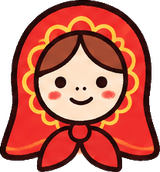

How the dolls fit together.
Three layers, one rule each. This is the whole protocol in plain words.
Three layers
The protocol is the outer doll: a registry of pads and the code every pad runs on. A pad is the middle doll: a named launchpad with fixed fee rules, owned by whoever opened it. A coin is the inner doll: a token launched inside a pad, with its own Uniswap v4 pool.
What a pad owner decides
- Buy fee, from 0.5% to 5%, and sell fee, from 0.5% to 8%. They can differ — that is how a HODL pad works.
- Owner cut, from 0 to 60% of the fees generated by coins in the pad.
- Name, niche and colour. These are cosmetic and live in the pad's metadata.
Fee rules are locked when the pad is opened. A buyer can read them once and know they will not move.
What happens when a coin launches
The creator picks a pad and submits name, ticker and image. One transaction mints a fixed supply, opens the coin's Uniswap v4 pool against ETH with the pad's fee rules attached, and places the starting liquidity — which has no withdraw function. The coin trades from that block, from any wallet or router that reaches Uniswap v4 on Robinhood Chain.
Where fees go
Fees are taken in ETH on each swap and split three ways: 10% to the protocol, the owner cut to the pad owner, and everything else — never less than 30% — to the coin's creator. Each party claims their own balance whenever they like.
What the protocol cannot do
- Change a pad's fees or cut after it is opened.
- Raise its own 10%.
- Touch a coin's liquidity or anybody's unclaimed fees.
Status
The contracts are being written and tested. Nothing is deployed, and there is no $PADOSHKA address yet. When there is, it will be published here and on our own channels only. Every pad and coin on this site today is a sample.